Callegari: an Italian industrial history

7 minutes
7 minutes

The name Callegari has not always been associated with the nautical sector; its origins lie in a much broader and more complex industrial path. It is a profoundly Italian story, which intertwines business, community and the ability to adapt over the generations.

We will retrace this journey through a series of dedicated insights, illustrating how a company initially involved in the production of bags and tires for agriculture has gradually become a reference in the international nautical panorama.

An evolution matured through conflicts, economic transformations and complex scenarios, always with the ability to reconfigure processes and technologies according to the needs of the time.
Today, thanks to a recent acquisition and a far-reaching rebranding, Callegari is experiencing a new phase of relaunch. A path that culminates in the development of a Maxi RIB and an advanced range, capable of combining manufacturing tradition and aerospace innovation.

But to get to this goal, we need to start from the beginning.
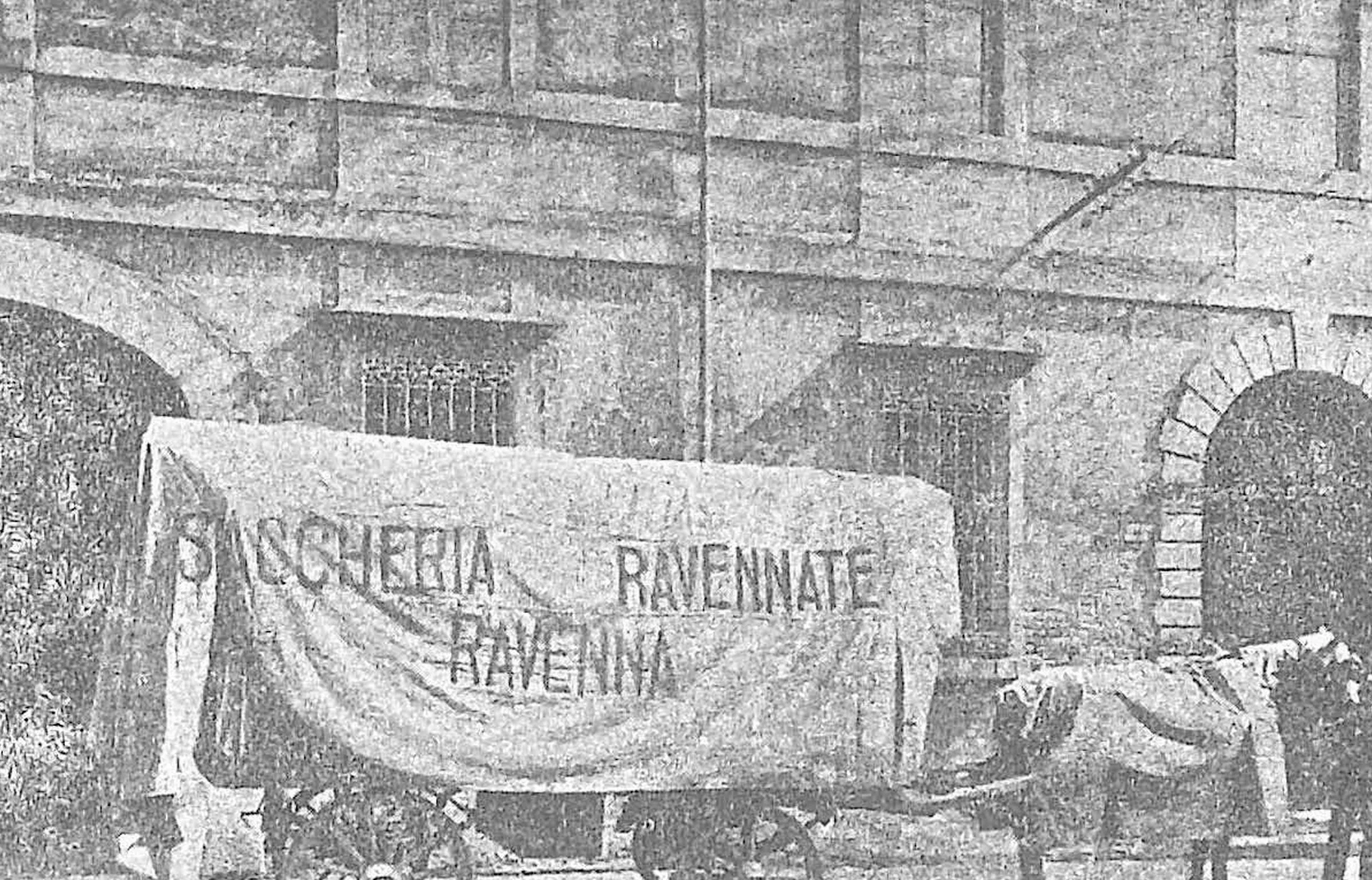
The “Saccheria Ravennate”: the right intuition

Founded in Ravenna in 1906 as “Saccheria Ravennate Callegari & Ghigi”, the company initially operated in the agricultural sector producing bags, tires and tarpaulins.

Already in the first decades of activity, however, a strong attention towards the study of waterproofing materials and technical processes emerged.

It is an extremely advanced choice for its time.

The entry of the chemist Enrico Levi led to the birth of the first real internal laboratory dedicated to the development of compounds, dyeing processes and technologies for rubber vulcanization.

It was here that Callegari began to build its technical expertise.

Corporate resilience during the Great War

The industrial plan launched by the new ownership is totally focused on innovation and the verticalisation of production processes. Aviorec is applying standards and methodologies typical of the aerospace sector for Callegari:

  • Cutting-edge Materials: extensive use of advanced composite materials, including pre-impregnated carbon fibre processed in autoclave.
  • In-house production: verticalization of all production phases as
    strategic choice, bringing them in-house to the new factory. This
    allows an optimization of the steps, a reduction of times
    construction and, consequently, delivery times.
  • Certified Processes: complete renewal of production cycles,
    implementing 9100 certified quality systems, guarantee of control
    meticulous at every stage of construction.

The immediate impact of these engineering choices will be seen in the construction of the new range of RIB, starting from the hulls, which will be characterized by an exceptional combination of lightness, rigidity and silence during navigation. All this technology will blend perfectly with the traditional and artisanal knowledge that has been the distinctive feature of Callegari for almost a century.

The 1950s and industrial evolution

The end of the war, although bringing with it the long-awaited peace, did not mean a simple period for Saccheria. On the contrary, the sudden collapse of the production of military supplies created many difficulties, calling into question the stability of the company and the continuity of work. It was at that moment that Costantino Callegari was once again able to demonstrate entrepreneurial intuition and ability to adapt: instead of passively suffering the crisis, he was able to transform it into an opportunity.

The beginning of the 1960s represents one of the most important moments in the history of the brand.

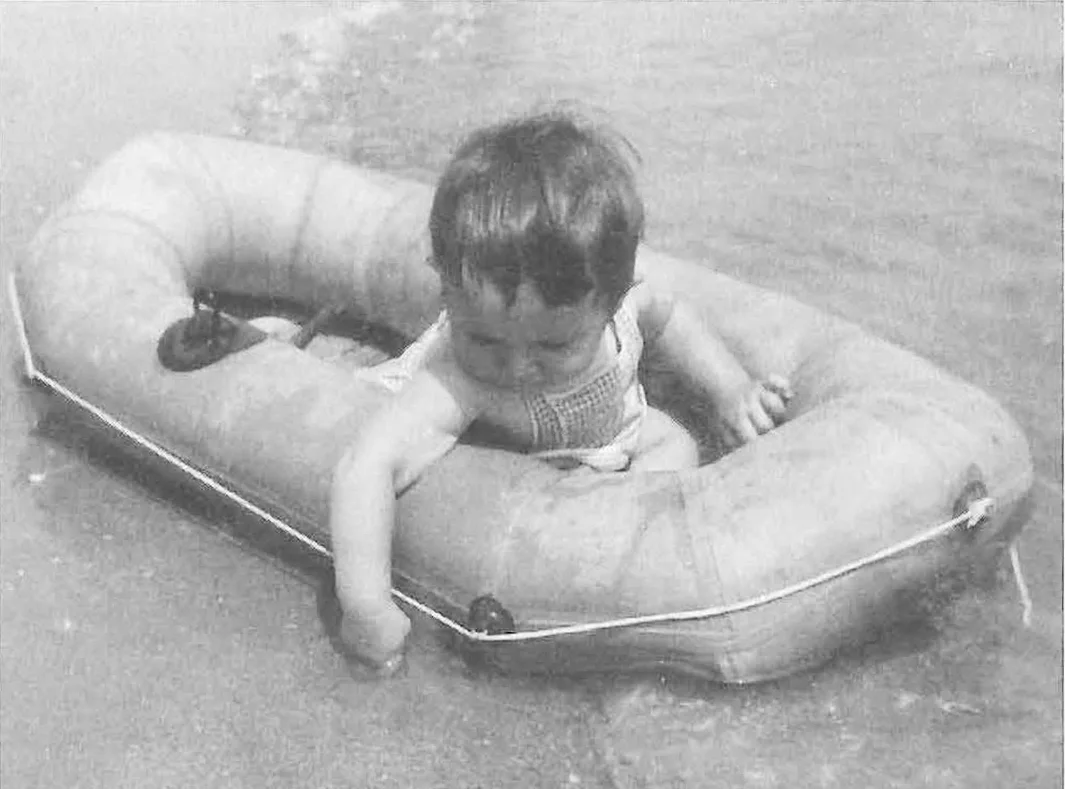
Antonio Zaccaria, technical director of the factory in that decade, brings a simple inflatable mattress to the laboratory with the aim of studying its structure and transforming it into something completely new.

The technical problem is complex: how to transform two-dimensional surfaces into a three-dimensional pneumatic structure capable of facing the sea?

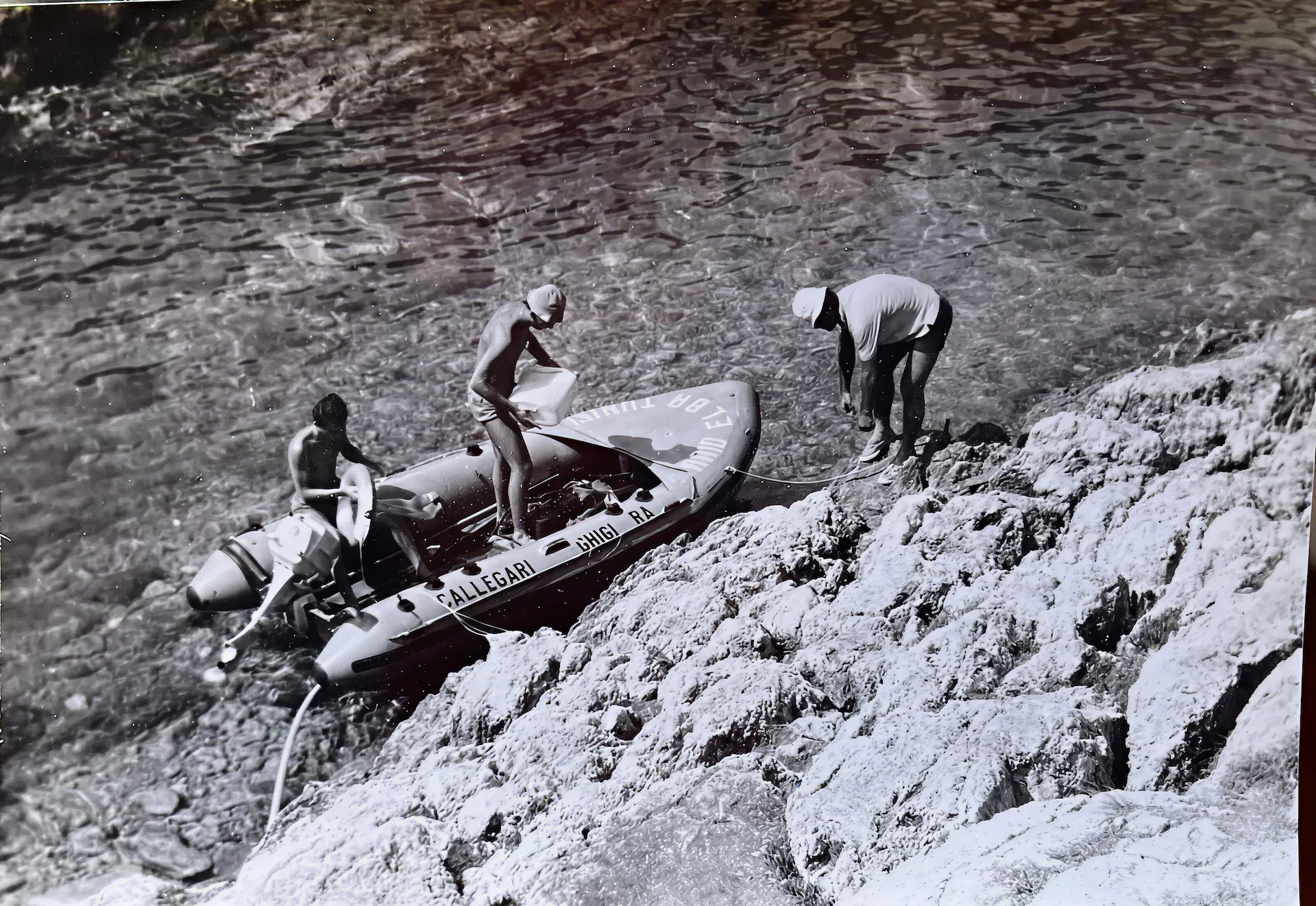
This is how the first Callegari inflatable boats were born.

The expertise developed over the years in the gumming of fabrics and the quality of glues allows the first prototypes to withstand increasingly greater loads and stresses.

When the first outboard engines were installed, the behavior of the boat surprised the designers themselves: the structure perfectly supported planing and opened the way to a new idea of ​​pneumatic navigation.

The Callegari inflatable boat was therefore born as a direct result of years of research on materials, geometries and industrial transformation technologies.

Liferafts and nautical engineering

In the sixties, the presence of Callegari at the Genoa Boat Show marks a fundamental step in its evolution towards the international nautical market.

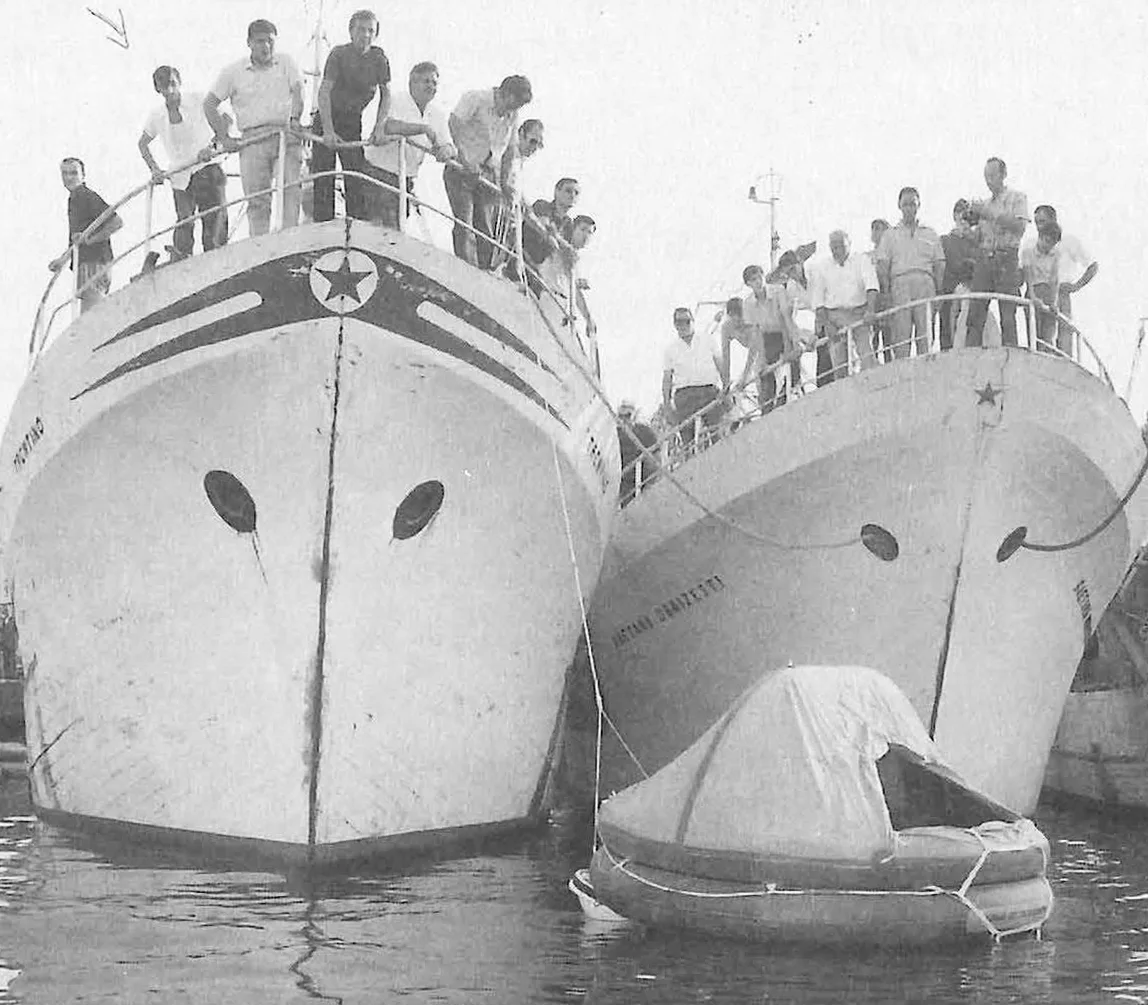
It is precisely in this context that the company comes into contact with a British company specialized in safety devices at sea, starting the production of self-inflating life rafts under British licence.

For Callegari it is not just a new production line, but a real technological leap.

The creation of these structures requires advanced skills in the pneumatic field, rapid inflation systems, valves, cylinders, fiberglass containers and particularly rigorous testing protocols.

Compliance with high technical standards leads the Callegari laboratories to further refine processes, materials and safety controls.

This know-how will become a decisive basis for the development of inflatable boats, transferring a design culture based on reliability, resistance and construction precision to the world of inflatable boats.

Hypalon, PVC and new polymers

Between the 70s and 80s, research at Callegari focused on the introduction of new synthetic materials.

Callegari develops advanced processes on Hypalon-Neoprene for high-end boats and expands the PVC coating lines through increasingly sophisticated industrial systems.

At the same time, high frequency welding technologies are introduced for plasticized fabrics, improving precision, resistance and structural continuity of the processes.

Even at this stage, the company continues to invest constantly in the development of composite materials and production processes.

From historical know-how to aerospace

Today the new course Callegari begins exactly from this technical and industrial heritage.

The integration with Aviorec Composites and the transfer of skills from the aerospace sector represent a natural evolution of a corporate culture that has always been oriented towards research.

Advanced composite materials, prepreg carbon, vacuum infusion processing, CFD simulations and structural control are not a break with the past.

They are the contemporary continuation of a path that began over a hundred years ago.

Because the history of Callegari is not just a nautical history.

It is the story of a company that has always tried to understand how to improve materials, structures and processes to build something more advanced.

And it is precisely this attitude towards research that continues to define the future of the brand today.